
You know, those tiny baby teeth do a lot more than make cute smiles. They play a big role in helping your child talk clearly, feel confident, and build healthy speech habits early on.
At Sumner Pediatric Dentistry, we believe understanding this connection can empower parents to support their child’s speech from the very start.
Why Baby Teeth Are Important for Speech
Baby teeth give structure to the mouth. They help with:
- Tongue and lip placement — You need certain front teeth for sounds like “t,” “d,” “s,” and “z.”
- Airflow control — Teeth help guide airflow when forming sounds, keeping speech clear.
- Jaw alignment — Healthy baby teeth help maintain space so permanent teeth come in correctly, avoiding shifts that complicate speech production.
What Can Go Wrong (And Why It Matters Early)
If baby teeth are missing too early, decayed, misaligned, or crowded, speech can be affected in ways many parents might not expect. Some common issues include:
- Distortion of sounds like “th,” “f,” “s,” “z” when front teeth are missing or misaligned.
- Difficulty with lip and tongue movements around gaps or when teeth overlap.
- Compensations in how children make sounds — e.g., placing tongue differently, altering mouth postures — which may lead to speech that sounds “slurred” or less clear.
What Parents Can Do to Support Speech & Teeth
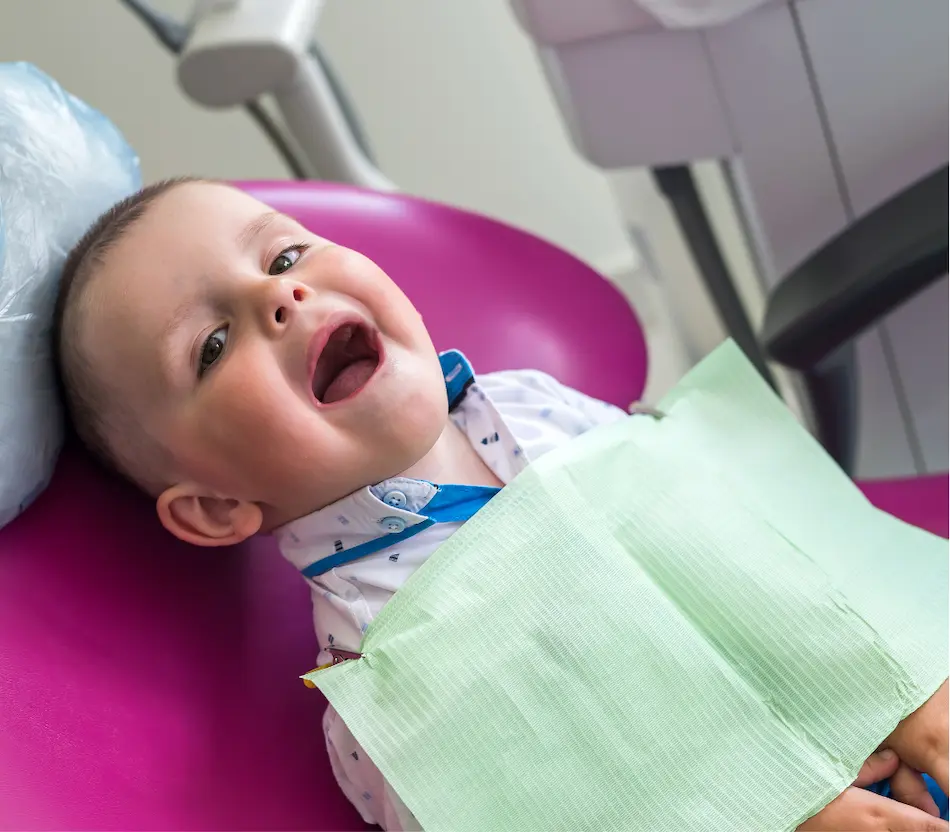
Thankfully, there are a lot of simple things parents can do to make sure baby teeth and speech are both on track.
Early Steps
- Schedule the first dental visit by age 1 or within six months of the first tooth. A dentist can check the structure, alignment, and catch anything early.
- Keep up good oral hygiene: brushing twice daily with a soft brush, a small amount of toothpaste, and cleaning gums even before teeth erupt.
Monitor Development
- Pay attention to “milestone” sounds as your child grows:
- By ~ 2 years, many children begin to produce clearer consonants like t, d, m, n.
- As more baby teeth come in, sounds become more precise.
- By ~ 2 years, many children begin to produce clearer consonants like t, d, m, n.
- If you notice consistent mispronunciations or teeth missing in front (incisors) for long periods, mention it to your dentist.
Healthy Habits
- Avoid prolonged thumb-sucking or pacifier use past age 3 or 4, which can influence tooth alignment.
- Prevent early childhood decay. Cavities or infections can lead to lost teeth or shifts.
- Encourage talking and reading, which gives children practice coordinating lips, tongue, and teeth.
When to Get Help
Some situations are worth extra attention:
- If front teeth fall out too early (due to decay or accident), especially before speech sounds are well established.
- If there’s noticeable difficulty with certain sounds even after teeth have come in.
- If the jaw or bite seems off (crowded or misaligned teeth). Your pediatric dentist can refer you to specialists if needed.
Final Thoughts
Baby teeth aren’t just placeholders; they’re tools for clear speech, confidence, and setting up healthy habits for life. By keeping them healthy, aligned, and intact, you’re giving your child a foundation for speaking clearly.
At SPD, we’re here to support that journey. If you ever have questions about your child’s teeth, speech, or development, we’d love to help. You don’t need a perfect situation, just small, consistent care and observant love each day.